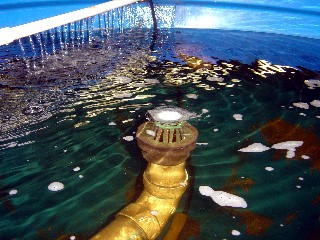
Mechanical pond filters separate solid waste from circulating water. The important second step is removing that captured waste from the system. A full basket or dirty chamber holding yesterday's debris is still part of the pond's waste load.
Collection Is Different from Separation
A skimmer collects surface water and floating debris. A bottom drain collects water and waste from near the floor. A settlement chamber, sieve, drum, or suitable filter media then separates solids from that water. A drain itself does not magically remove every leaf or corner deposit.
Surface Skimmers
Position a skimmer with the prevailing circulation in mind and use suitable fish protection. Empty the basket according to the actual debris load; daily inspection may be needed during leaf fall. A calendar rule such as “once a week” is insufficient when the basket fills sooner.
Bottom Drains and Settlement
Bottom drains can reduce manual cleaning when paired with suitable circulation, pipework, and prefiltration. Settlement depends on chamber design, flow, and particle behavior. It works better on settleable material than on very fine or buoyant debris.
The existing chamber illustration below is an example of a settlement arrangement, not a sizing specification for every pond.
Sieves, Drums, and Filter Pads
A sieve or drum uses a screen to separate particles. Pads and brushes capture material within media and need washing. Compare cleaning effort, waste-water use, replacement parts, and the unit's operating flow before selecting equipment.
A Useful Maintenance Test
- Is waste actually leaving the system through the basket or waste outlet?
- Is flow declining between cleans?
- Can you clean the unit without sending dirty water back to koi?
- Does the unit also provide biological filtration that needs gentler handling?
Keep solids removal separate from biological media care. The filtration guide shows how collection, separation, biofiltration, and return flow work together.