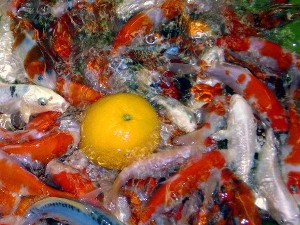
Koi eat a varied diet, but pond fish do best with a dependable feeding routine based on a complete koi food, actual water temperature, appetite, and the pond's ability to process waste. A fish coming to the surface is an invitation to observe it—not proof that another handful is needed.
Choose a Complete Food First
Select a diet formulated for koi and a pellet size the fish can handle easily. Compare storage instructions and the intended season or temperature range. Floating food makes appetite easy to observe; sinking food can be useful in some systems, but leftovers may be harder to see.
Buy amounts you can use while the food remains in good condition. Keep it dry, sealed, and protected from excessive heat. Growth and color labels do not replace balanced nutrition or guarantee a particular outcome.
How Much and How Often?
Start with the manufacturer's guidance and adjust to fish size, body condition, appetite, and water tests. Offer a small measured portion, observe the whole group, and remove uneaten food. If you use a minutes-to-consume rule, remember that competition and a very large first handful can make it misleading.
More daily meals do not guarantee faster or better growth. Heavy feeding increases waste and oxygen demand. Increase food gradually only while ammonia and nitrite remain controlled and the fish maintain suitable condition.
Adjust to Water Temperature
Measure water temperature instead of relying on the calendar or air temperature. Fish metabolism slows as water cools. Follow your diet's temperature instructions and the fish's condition; reduce feeding during cooling periods and heat stress.
- Active conditions: modest meals suited to the fish and system capacity.
- Cooling water: smaller amounts, close observation, and a diet intended for the conditions.
- Cold outdoor water: feeding is commonly withheld below about 50°F (10°C), subject to the diet and system guidance.
Wheat-germ diets are an option for some cooler conditions; they do not “clean out” a koi's digestive tract. Nor is “food rots inside every cold fish” an accurate explanation for seasonal management. The practical concerns are slower digestion, inappropriate intake, and additional waste.
Treats and Feeding Problems
Keep fruit treats occasional and small. Bread and an assortment of kitchen scraps are not a balanced feeding plan. If appetite changes suddenly, check water, oxygen, and temperature before changing brands or coaxing the fish with treats.
For an automated feeder, measure its actual delivery and account for every person feeding the pond. A simple food log can reveal why the filter struggles after weekends.
Reference for temperature-dependent feeding: Aquatic Veterinary Services: How to Feed Koi. Use the water-quality guide to check whether the routine suits the system.