
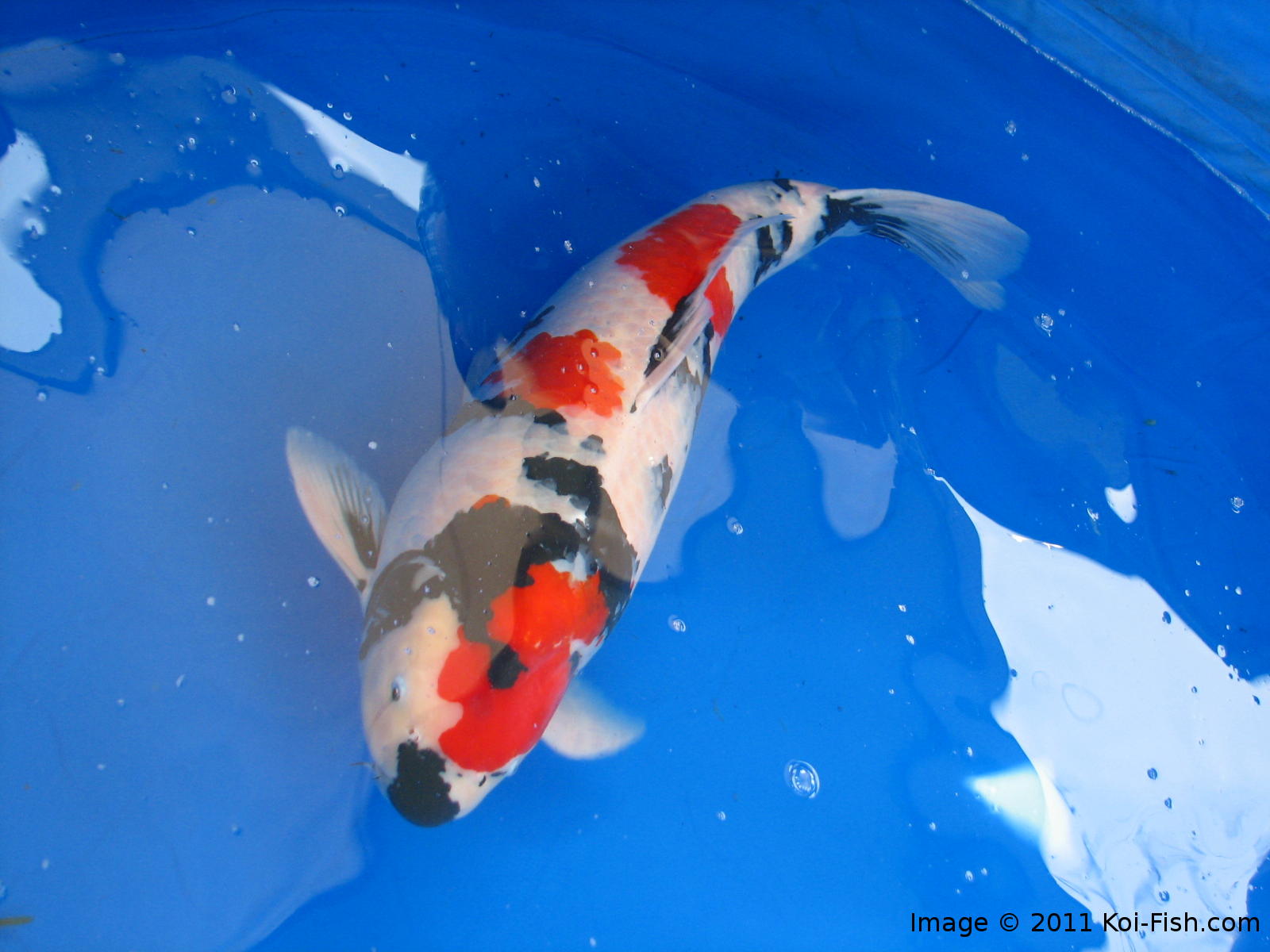
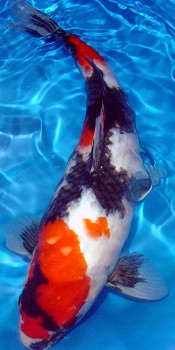
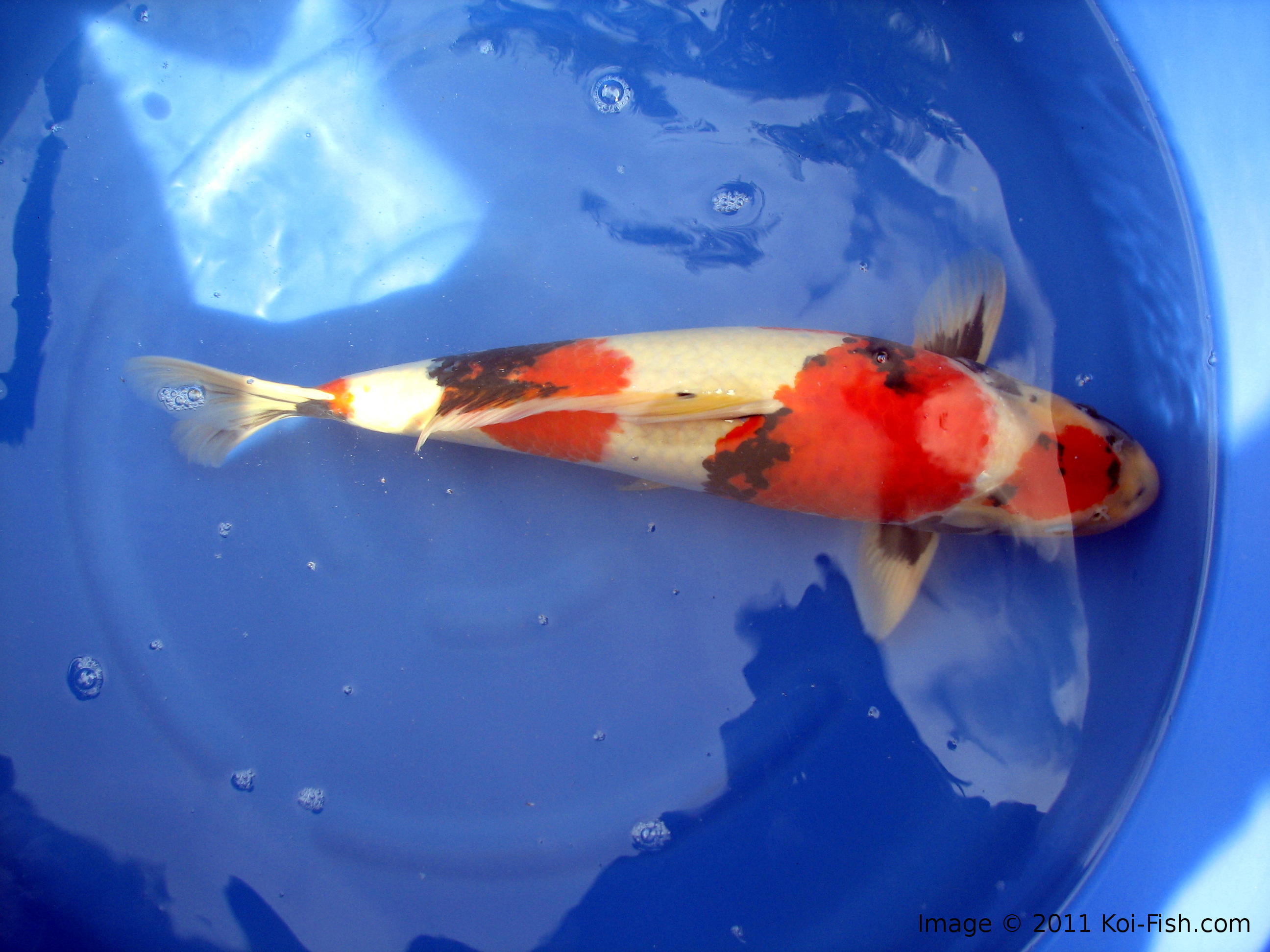
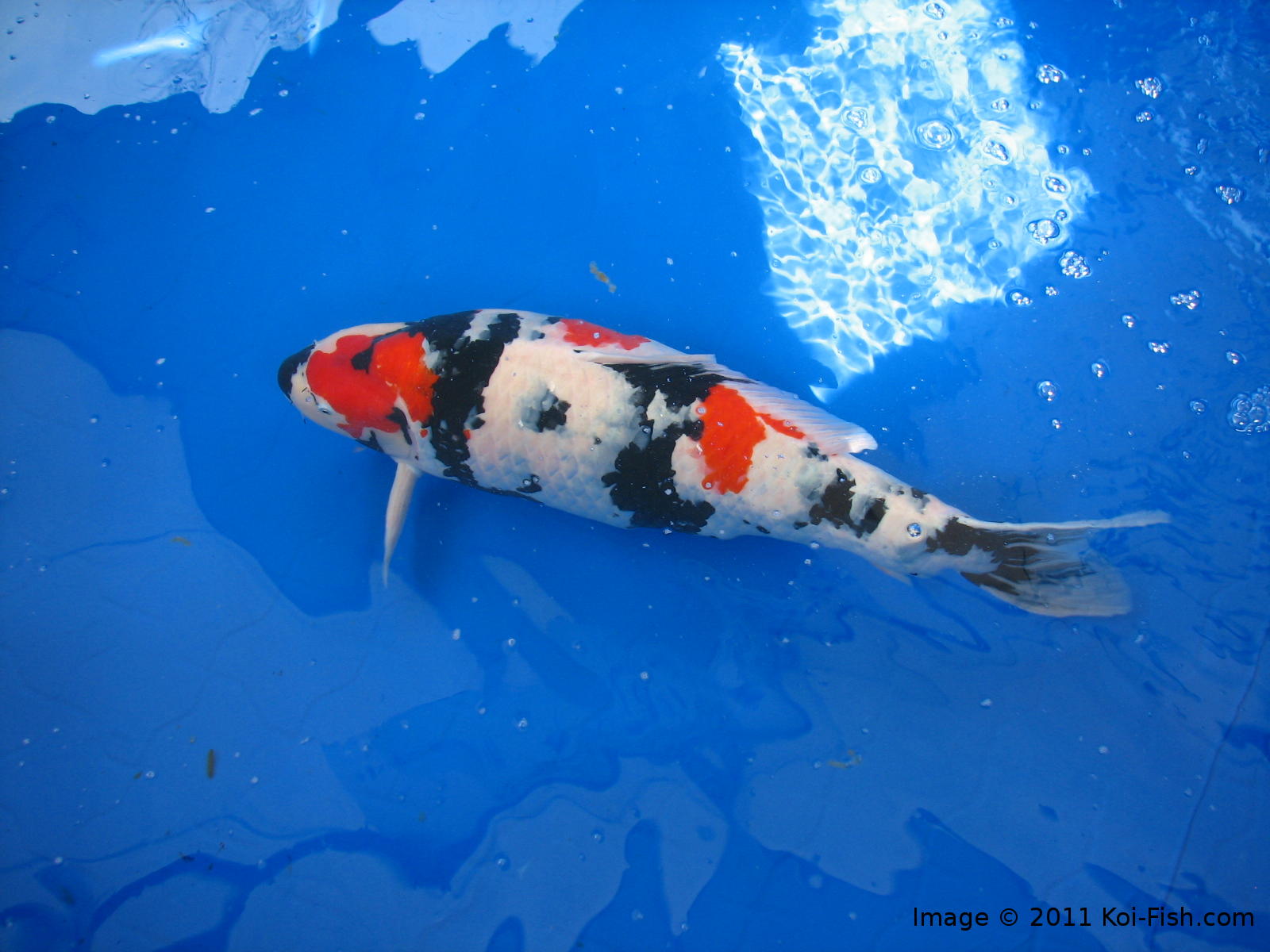
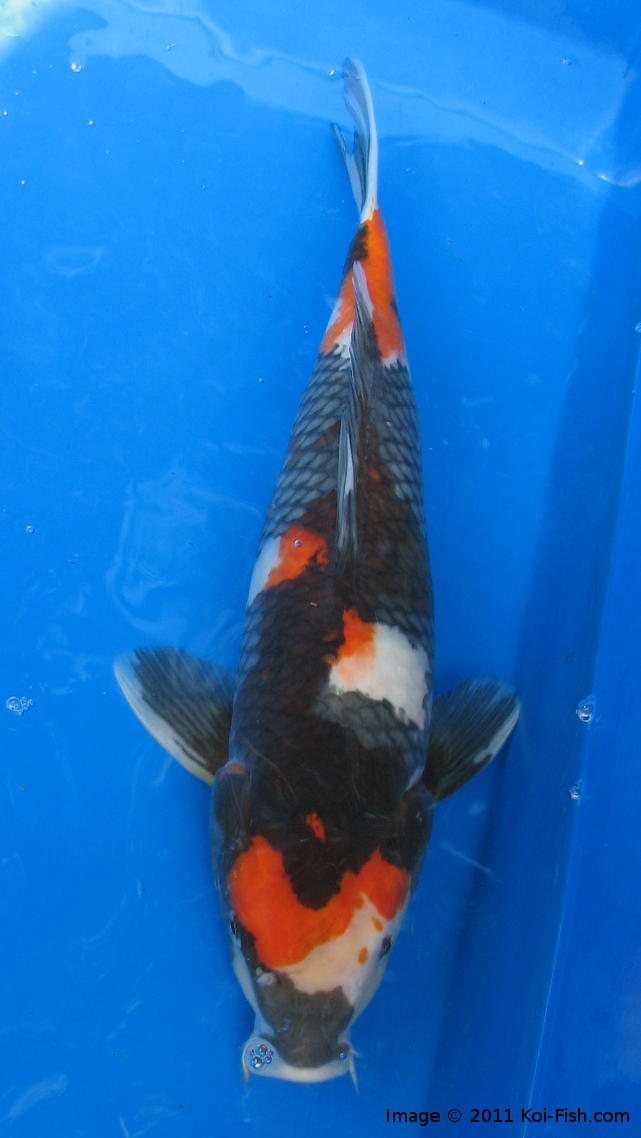
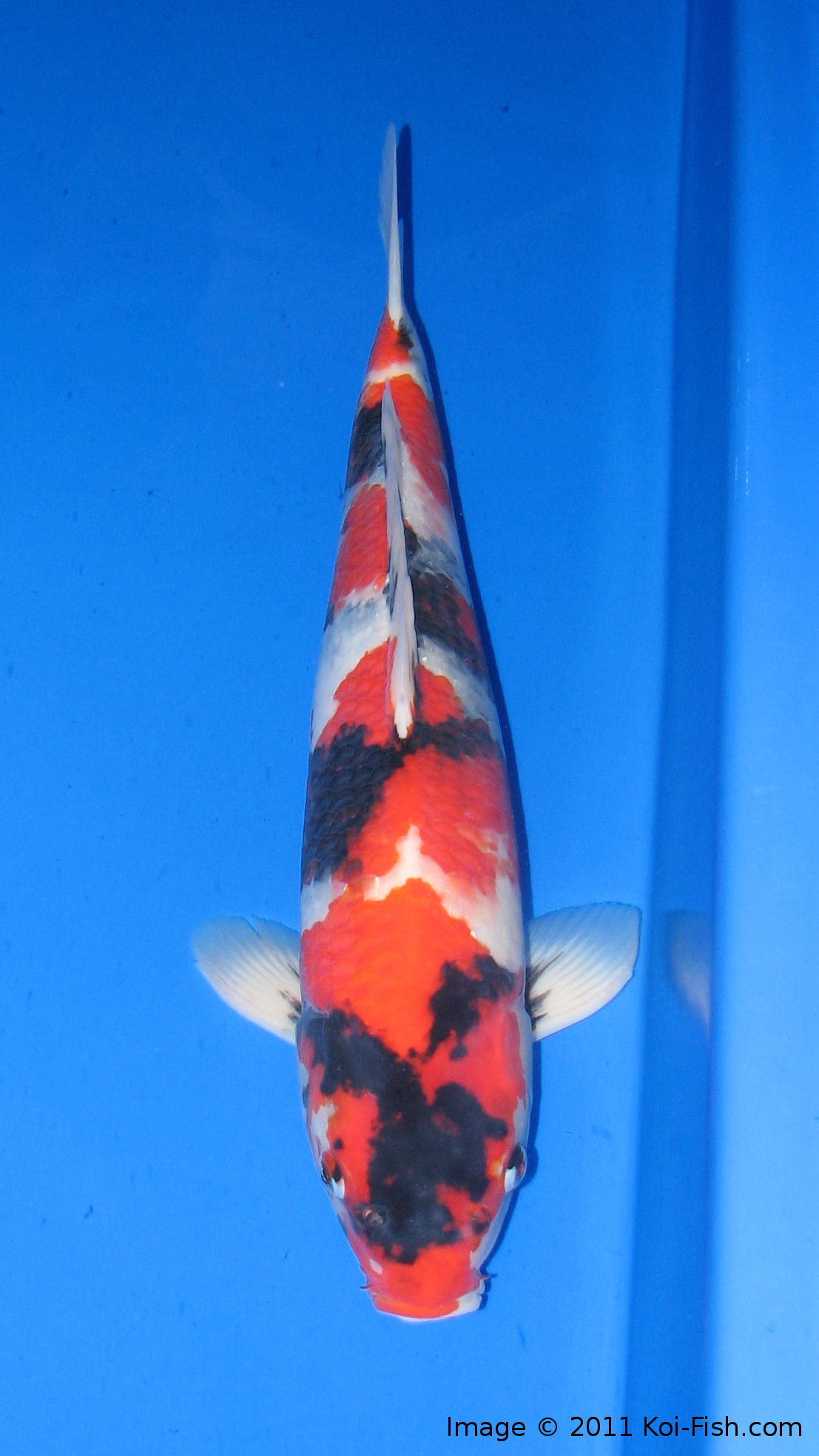
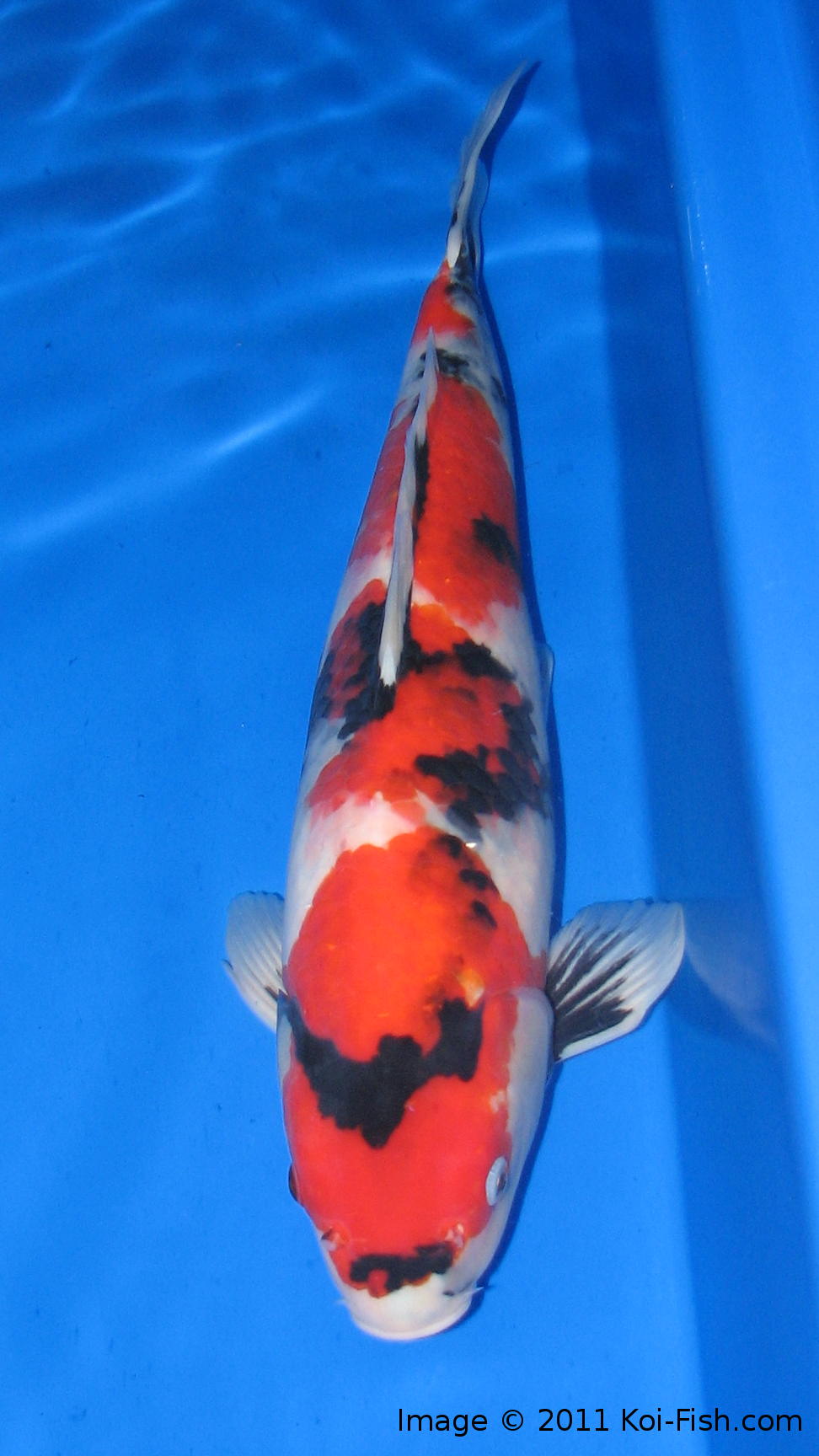
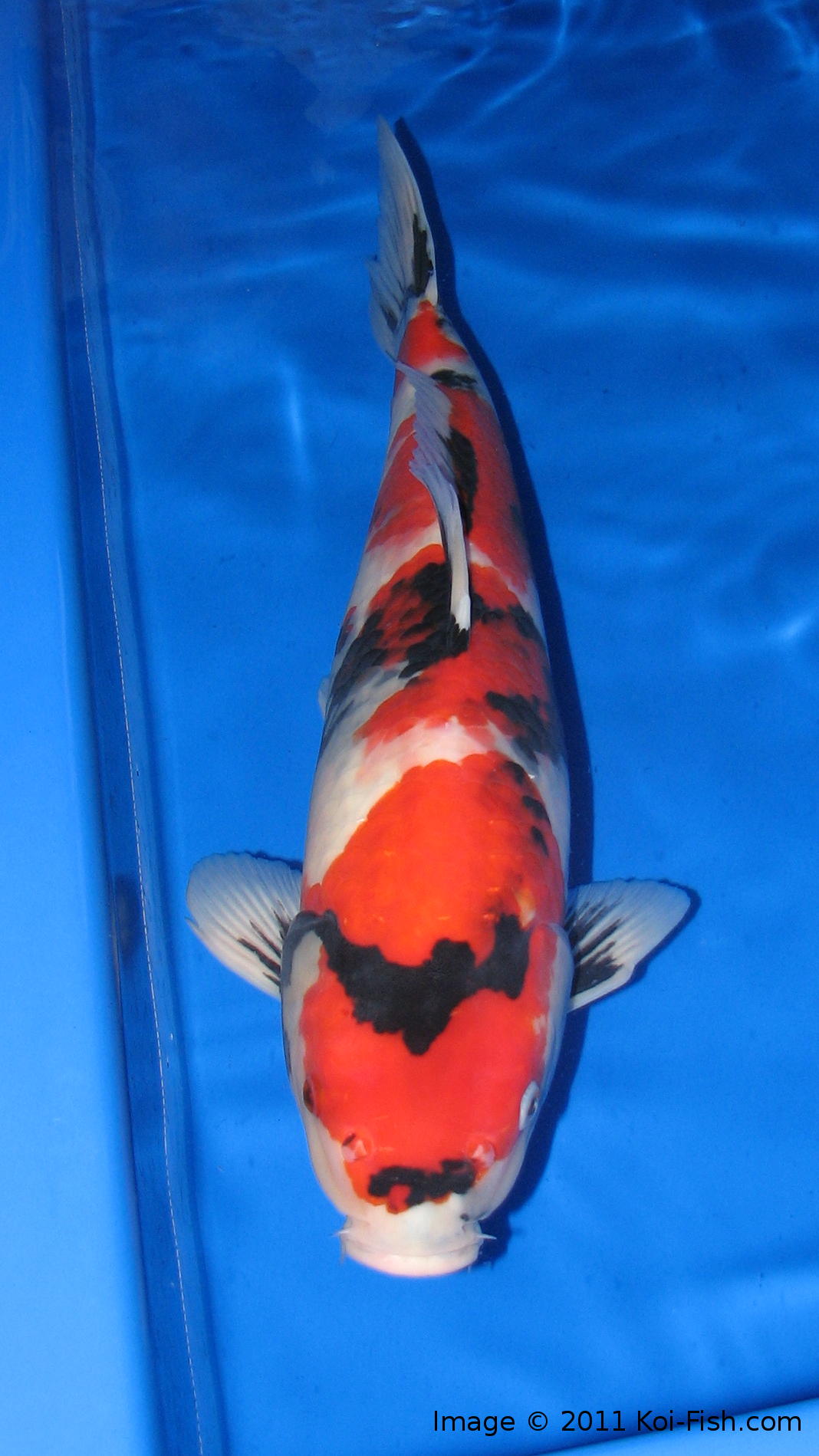
Showa, or Showa Sanshoku, are non-metallic koi with black, red, and white patterning. They belong to Gosanke with Kohaku and Sanke. Their characteristic sumi can extend around the body and onto the head, giving the pattern a different structure from the black markings of a typical Sanke.

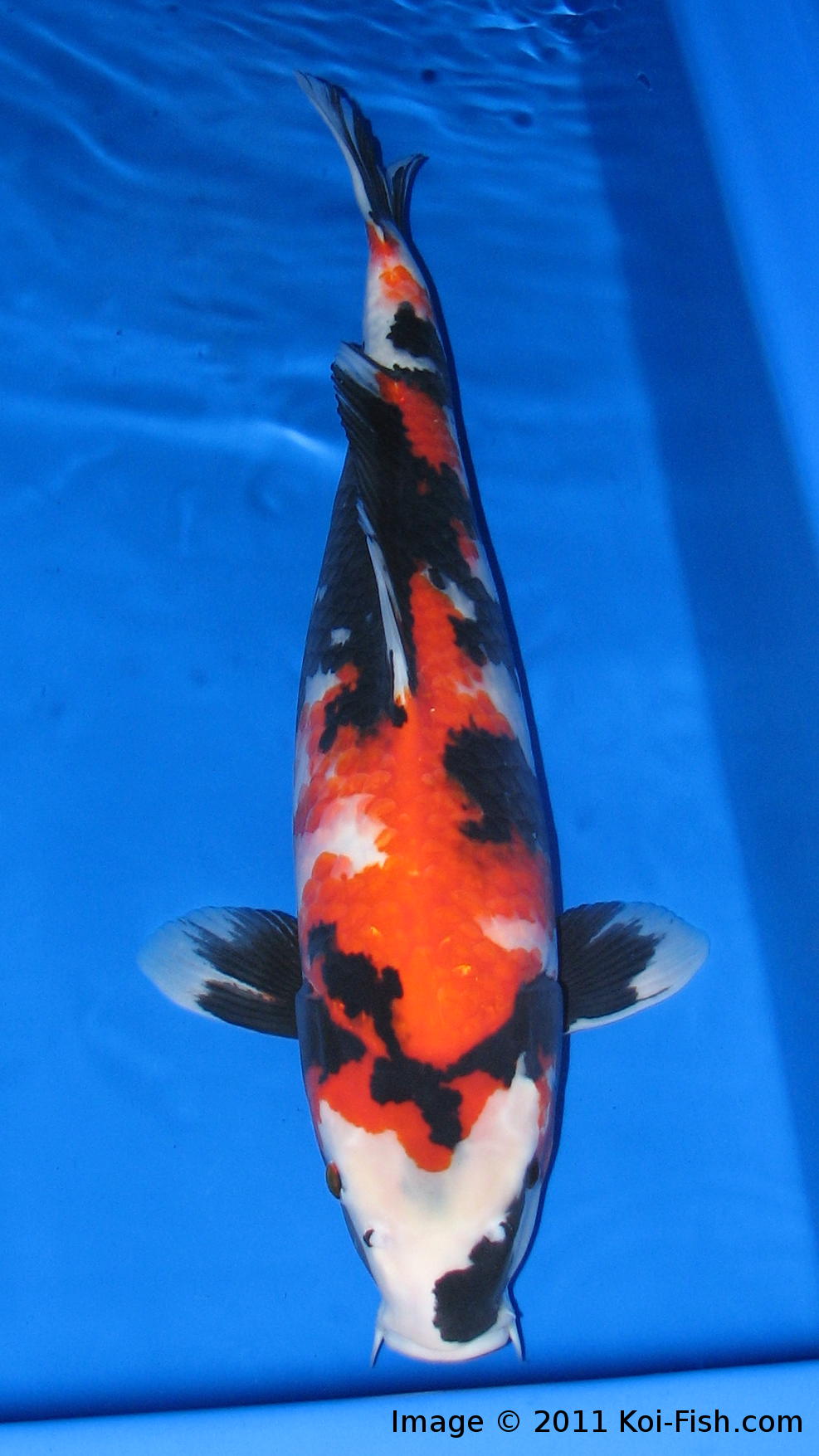
How to Identify Showa
- Three principal pattern colors: black sumi, red hi or beni, and white.
- Substantial black that may wrap down the sides rather than staying as small dorsal patches.
- Black on the head is a useful clue, considered with the rest of the pattern.
Showa are conventionally described as black-based koi with red and white markings. That description does not require black to occupy most of the visible surface of every individual. Modern examples can show substantial white.
Showa vs. Sanke
Both varieties can have red, white, and black. Sanke are usually recognized by a white-ground impression, red plates, and more separated sumi. Showa often carry stronger wrapping black and black on the head. Assess several clues together, especially in a young fish with incompletely developed sumi.
A white-rich Showa is often described as Kindai Showa. A red-heavy pattern may be called Hi Showa. These descriptions concern the balance of the visible pattern; they do not turn every light Showa into Sanke.
Look at the Head, Fins, and Sides
A black division across the head is often called menware. Black at the base of the pectoral fins is called motoguro. These can contribute to a characteristic Showa appearance, but they are not a checklist requiring every pet Showa to have identical marks.
Watch the fish turn. A top-view photograph can hide the extent of sumi below the shoulders and along the sides. Body shape and skin condition deserve attention before choosing a dramatic head pattern.
Pattern Development Is Not Guaranteed
A young Showa may have gray developing areas, changing sumi, or a different apparent color balance as it grows. Breeder information and dated photographs help describe that history, but a bloodline does not guarantee permanent color or an exact future pattern. Choose a fish whose current body and appearance you already enjoy.
Compare Related Varieties
Shiro Utsuri has a black-and-white Utsuri pattern without red. Kin Showa is the metallic Showa-type comparison. A Ginrin Showa has sparkling individual scales, which is different from continuous metallic skin luster.
Before adding a Showa, review seller and health checks and quarantine. Return to koi classification to compare the full photo directory.