
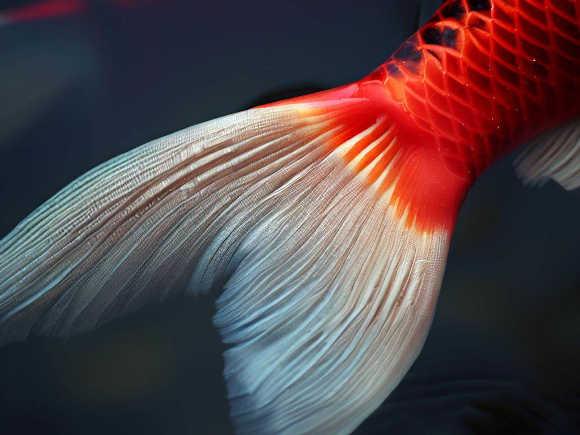
Koi fins help the fish move and maintain control in the water. Learning their positions makes it easier to describe what you see and to notice changes without catching the fish for a routine inspection.
The Main Fins
FinPosition and usual arrangementDorsalAn unpaired fin along the backPectoralA paired set behind the gill regionPelvicA paired set on the undersideAnalAn unpaired fin behind the ventCaudalThe tail finThe tail is normally forked. Multiple separate tails, familiar in some fancy goldfish, are not a normal defining feature of koi.
How Fins Support Movement
The body and tail provide propulsion, while the other fins contribute to steering, stability, and controlled positioning. Their roles work together; no fin is simply decorative. Watch a fish turn or hold position to see how these movements coordinate.
Standard Koi and Longfin Forms
Longfin or butterfly koi have elongated fins. That does not turn every longfin fish into a separate species or make flowing fins a standard requirement for ordinary show koi. Recognition and competition classes depend on the relevant show rules.
Changes Worth Recording
New tears, progressive erosion, unusual redness, clamping, or impaired movement deserve attention. A fin can show an injury or other problem, but appearance alone does not identify the cause. Note whether one fish or several are affected and whether breathing, appetite, or water tests have also changed.
Protect Fins Through Care
Avoid sharp pond fittings and unnecessary chasing or handling. Check equipment and water conditions when abnormalities appear, and seek fish-health advice for persistent damage or serious distress. Do not trim fins to improve appearance. Read handling guidance, baseline health observations, and scale and skin features for related care.