
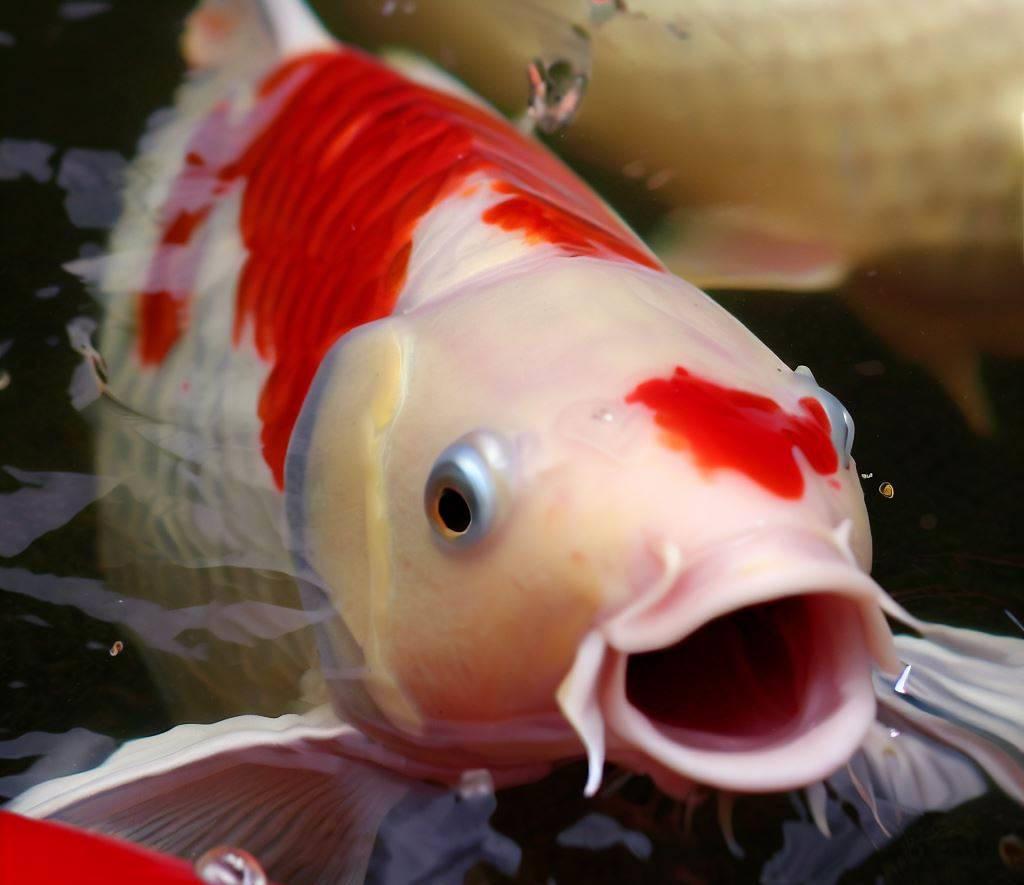
A daily koi health check compares swimming, breathing, skin, fins, and appetite with each fish's normal behavior. A healthy-looking fish is not guaranteed free of infection. Temperature, variety, and individual habits matter more than a perfect snapshot.
Use this koi health checklist during your daily pond visit. It takes only a few minutes and can reveal water-quality trouble, stress, injury, or illness before the problem becomes severe. For a broader care routine, see our complete beginner's guide to koi care.
10 signs of happy, healthy koi
- Steady, balanced swimming. Healthy koi move smoothly and remain upright. They should not roll, spiral, float helplessly, or struggle to stay below the surface.
- Normal interest in food. Most koi approach when feeding begins and eat with the group. Appetite naturally decreases in cold water, so compare behavior with the season and water temperature.
- Open, relaxed fins. The dorsal and pectoral fins should usually be held away from the body. Fins clamped tightly against the body can be an early sign of stress or poor water quality.
- Even breathing. Both gill covers should move at a similar, unhurried rate. Rapid gill movement, repeated surface gasping, or gathering near a waterfall may indicate low oxygen or irritated gills.
- Clear eyes. Look for eyes that are clear and similar in appearance. Cloudiness, swelling, injury, or one eye that suddenly looks different deserves closer attention.
- Skin and scales appropriate to the variety. Recognize reduced Doitsu scaling. Look for new sores, swelling, excess mucus, missing scales, or raised scales rather than judging health by brightness or a uniform scale coat.
- A well-shaped body. The fish should not look pinched behind the head, unusually swollen, or dramatically thinner than the rest of the group.
- Normal social behavior. Koi commonly swim with other koi and explore the pond. A fish that suddenly isolates itself, rests constantly, or hides when the others are active may be stressed.
- No repeated flashing or rubbing. An occasional quick movement can happen, but repeated rubbing against the pond, jumping, or sudden darting may point to parasites or irritating water conditions.
- Consistent daily behavior. You know your pond better than anyone. A sudden change in appetite, swimming, breathing, or position in the pond is often more important than a single textbook symptom.
A two-minute daily koi health check
- Watch the pond for 30 seconds before the koi notice you. Check swimming balance, breathing, and whether any fish is isolated.
- Observe the group at feeding time. Note any fish that does not approach, cannot compete, spits food out repeatedly, or eats much less than usual.
- Look down both sides of each koi as it turns. Check the eyes, mouth, fins, scales, skin, and body shape.
- Scan the pond itself for cloudy water, foam, unusual odor, reduced flow, or a stopped pump or air system.
Keep a short note or photo when something looks different. Comparing observations from one day to the next makes subtle changes easier to recognize.
Warning signs that need prompt attention
- Gasping at the surface or crowding around moving water
- Rapid breathing or one gill moving differently from the other
- Loss of balance, rolling, spiraling, or lying on one side
- Repeated flashing, jumping, or frantic darting
- Open ulcers, bleeding, cotton-like growth, or rapidly spreading redness
- Clamped fins combined with isolation or loss of appetite
- A swollen body with raised scales
- Several fish changing behavior at the same time
When several koi change together, check aeration, flow, and water immediately. Environmental trouble and infection can both affect a group. Severe breathing distress, loss of balance, rapidly worsening lesions, or deaths need prompt veterinary help alongside these checks; do not wait for water correction to fail first.
Check water quality before reaching for treatment
Poor water can produce signs similar to parasites or infection. Use suitable reliable tests and record the actual results, units, temperature, and timing. Review trends and the system context:
- Ammonia and nitrite: aim for no detectable result in an established functioning system; investigate any detection.
- Nitrate: monitor accumulation and use trends to plan maintenance.
- pH and alkalinity: assess stability and buffering rather than chase an arbitrary pH number.
- Temperature and dissolved oxygen: interpret together with breathing, weather, and aeration.
Avoid sudden pH adjustments; ammonia risk also depends on pH and temperature. If ammonia or nitrite is detected, reduce new waste while checking aeration and filter performance, and obtain a suitable correction plan. Any replacement water must be appropriately conditioned and compatible with receiving conditions.
Read water quality and pond filtration for system care.
Feed in a way that supports healthy behavior
Offer a quality koi food appropriate for the current water temperature and give only what the fish can finish promptly. Uneaten food increases the load on the filter and can quickly damage water quality. Watch every koi while feeding; this is often the easiest time to notice appetite changes, mouth injuries, or a fish being pushed away from the group.
Adjust both food type and frequency as the water warms or cools. See the seasonal koi feeding guide for temperature-based guidance, and use treats as an occasional supplement rather than a replacement for a balanced staple food.
Create a pond where koi can behave normally
Healthy behavior depends on a stable environment. Provide adequate swimming space, reliable biological filtration, strong aeration, shade during intense heat, and protection from predators. Avoid sudden temperature or chemistry changes. Any new koi should be quarantined before joining the pond because a fish can carry parasites or pathogens without obvious symptoms.
Stress is cumulative. Crowding, unstable water, low oxygen, poor nutrition, rough handling, and constant predator pressure may each seem manageable on their own but can combine to weaken a koi's defenses.
A simple weekly routine
- Test ammonia, nitrite, nitrate, and pH; check alkalinity when pH stability is a concern.
- Inspect pump flow, aeration, skimmers, drains, and filters.
- Remove accumulated debris without destroying beneficial bacteria in biological media.
- Compare each koi's appetite, swimming, fins, skin, and body shape with the previous week.
- Record water results, maintenance, new fish, treatments, and unusual behavior.
Frequently asked questions
Do happy koi always come to the surface?
No. Many healthy koi approach people because they associate them with food, but cautious fish may stay deeper. A sudden change from friendly behavior to hiding is more meaningful than whether a koi is naturally shy.
Is jumping a sign that a koi is happy?
Not necessarily. A single jump can be harmless, but repeated jumping or flashing can indicate irritation, parasites, poor water quality, or low oxygen. Test the water and observe the entire group.
Why are my koi resting on the bottom?
Koi may become quiet in cold water, especially during winter. Bottom sitting during warm weather—particularly when combined with clamped fins, rapid breathing, or loss of appetite—can signal stress and should prompt a water test and closer examination.
How often should I inspect my koi?
Watch them briefly every day and perform a more deliberate head-to-tail visual check at least weekly. Daily familiarity makes it much easier to recognize early changes.
For a structured observation sequence, use the step-by-step health check. Record changes with baseline comparisons and use distress response for urgent signs.