
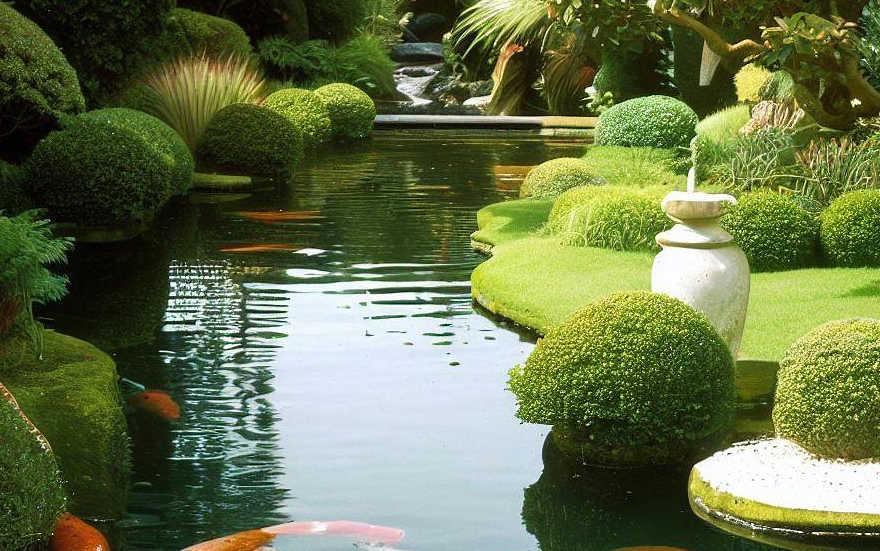
Use these 10 illustrated concepts to choose the look of your pond, then check how each design will operate. The images are inspiration rather than construction drawings or proof of fish capacity. Keep adult swimming space, filtration, oxygen, safety, and maintenance in every design.
1. Natural-Looking Waterfall
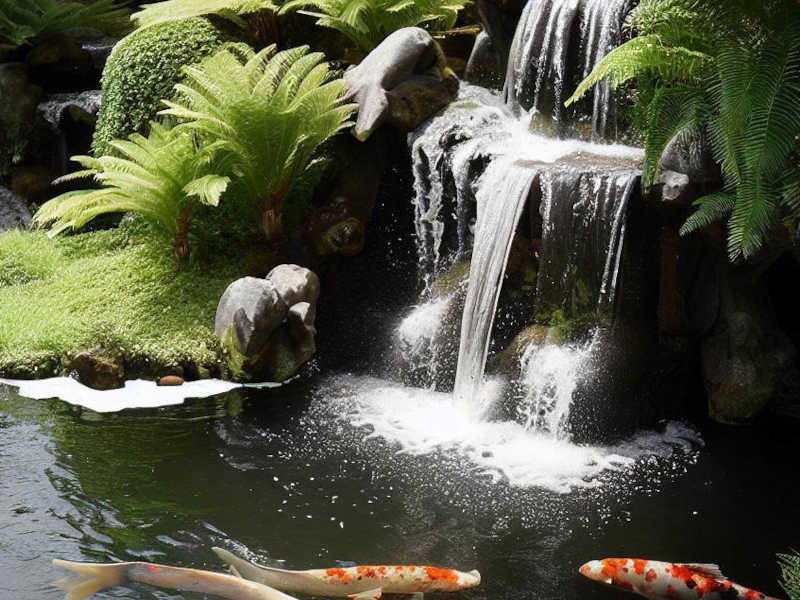
Natural stone and a contained cascade create movement and sound. Specify the pump duty point, lined splash area, safe stone support, and waste access. A dramatic waterfall cannot certify oxygen sufficiency, and its circuit needs a winter and outage plan.
2. Japanese-Inspired Garden
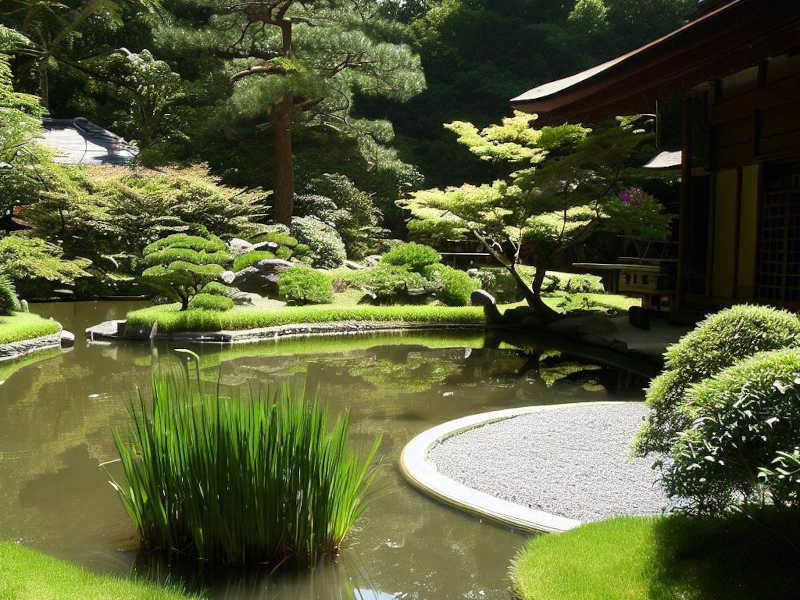
Use a restrained composition of water, planting, paths, and stone. Japanese gardens include several different traditions; an ornament or bridge does not make a design universally authentic or a Zen garden. Keep practical access and actual fish capacity part of the composition.
3. Contemporary Minimalist Pond
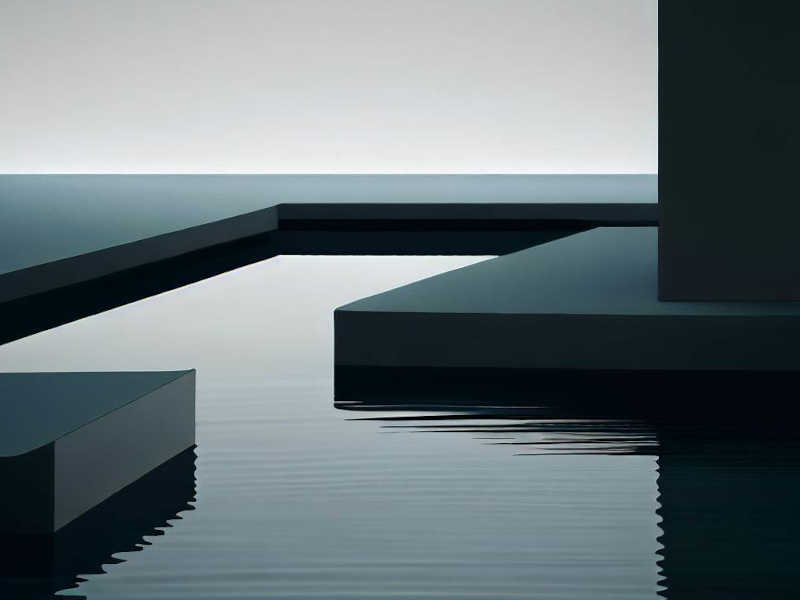
Simple geometry can make fish and reflections the focus. Hiding equipment should mean screening it, rather than burying it beyond service reach. Clean lines still need suitable collection points, overflow, circulation, and a safe route for people.
4. Raised Pond with Water Spouts
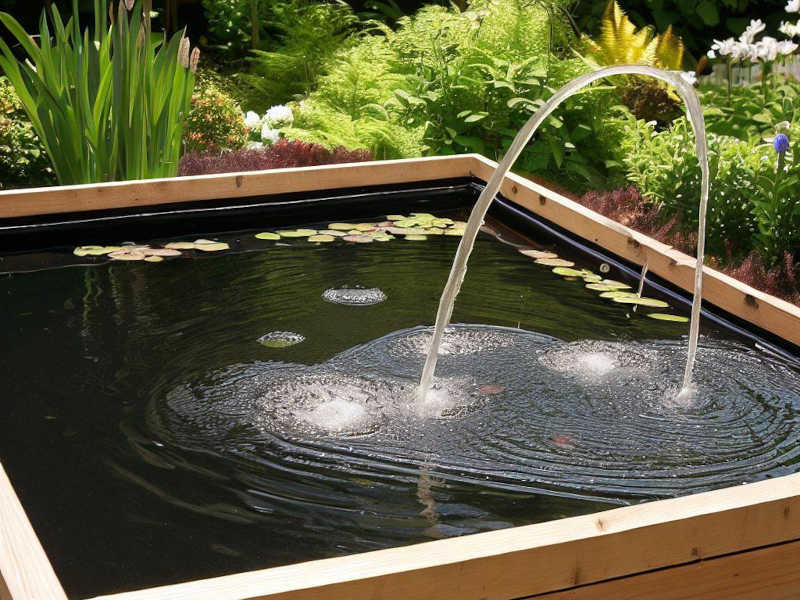
A raised edge can improve the viewing angle and reduce the need to bend. The wall, foundations, and penetrations need suitable structural design. Height alone is not child protection; assess access, climbable furniture, and supervision.
5. Pond with a Viewing Window
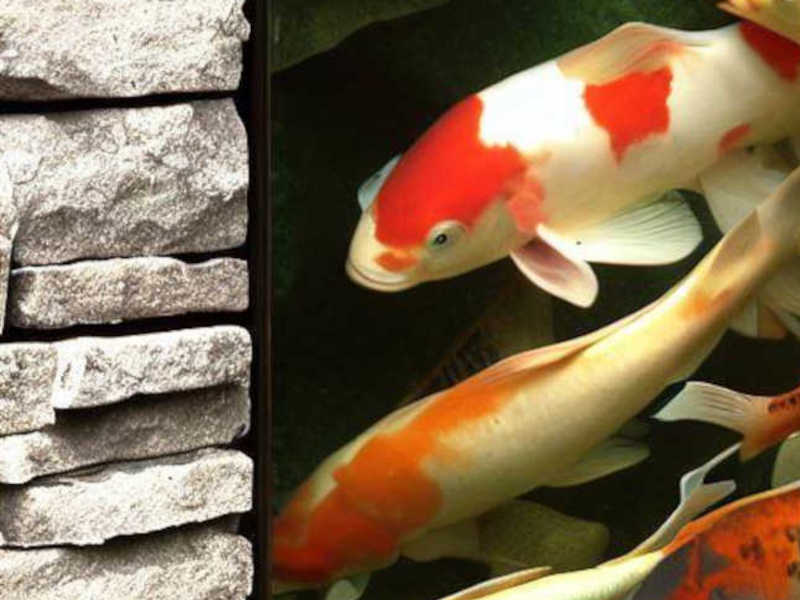
Side-on viewing offers another perspective on movement. Treat the panel, frame, supports, seals, and surrounding wall as an engineered system. Do not choose glass thickness or adhesive from a photograph. Plan cleaning access and a leak response.
6. Pond with Changes in Level
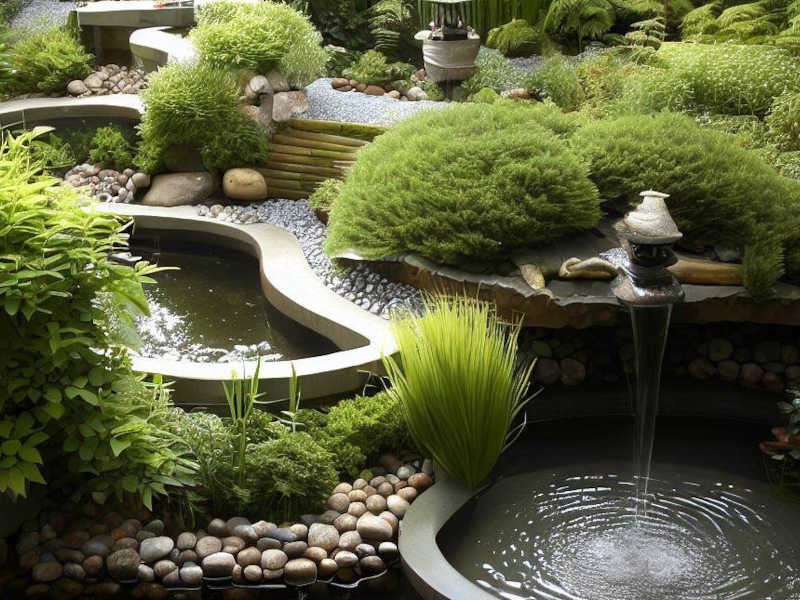
Separate visual tiers from the fish's permanent habitat. A shallow upper feature may be unsuitable for koi. Check containment, overflow, power-loss drainage, entrapment risks, and safe access before connecting several levels.
7. Pond Beside a Deck or Patio
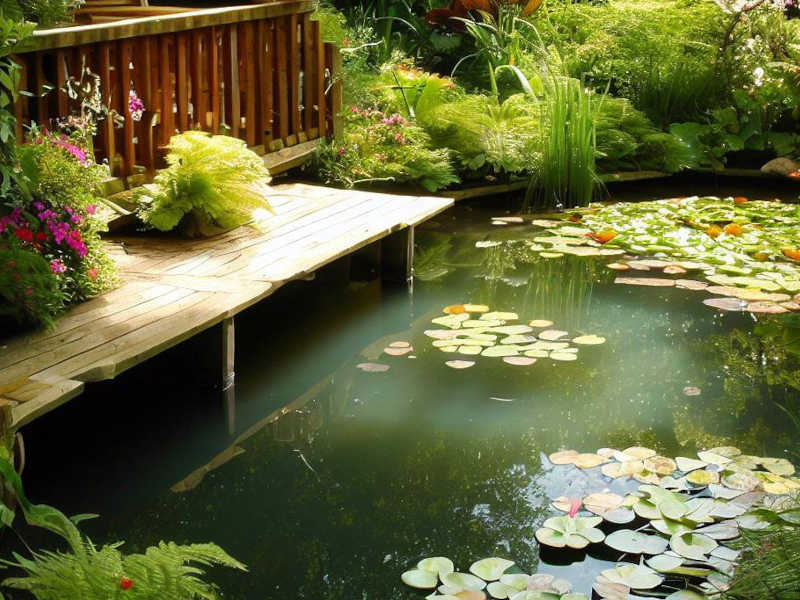
A comfortable seat makes viewing easier. Keep walking surfaces, edges, barriers, and maintenance access appropriate. Allow room to move without leaning over the water, and prevent surface drainage or treated-material runoff from reaching the pond.
8. Lush Planting around the Pond
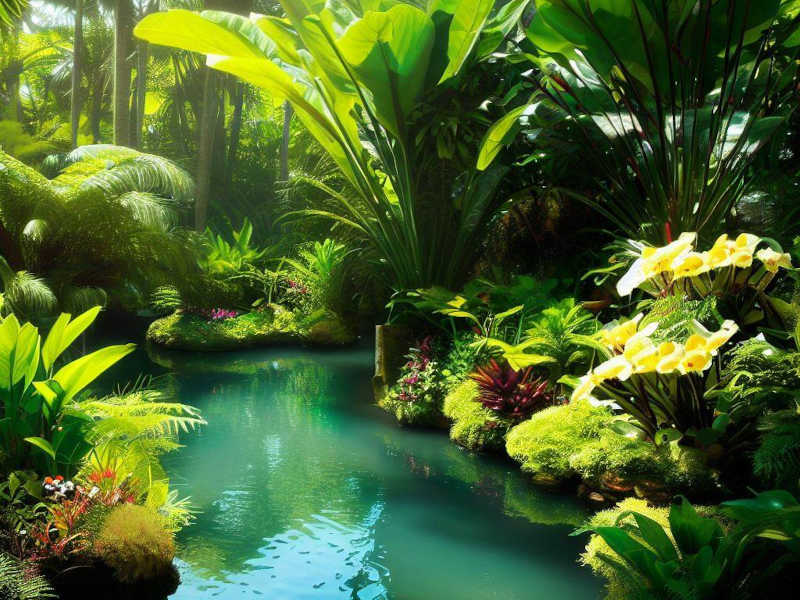
Use plants adapted to the actual climate and region for a lush effect. Keep roots, soil, fertilizer, and dead leaves out of equipment and water. A tropical appearance does not require invasive species or plants that will fail each winter.
9. Limited Nighttime Illumination

Choose a viewing period, controlled glare, and fixtures approved for their locations. Water-resistant garden products are not automatically submersible. Preserve a regular dark period and keep lighting separate from essential backup-power loads.
10. A Realistic DIY Design
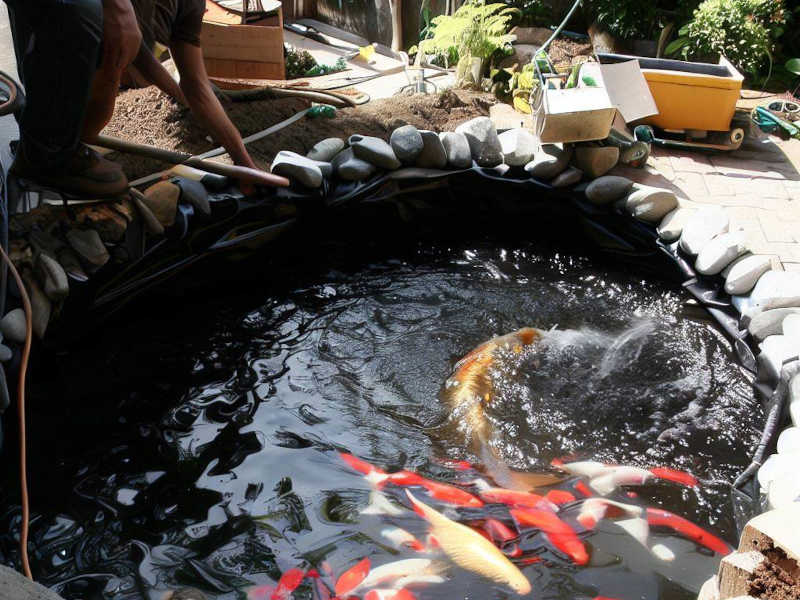
Choose a build that matches your skills, with specialist help for structural, heavy-lifting, and electrical work. Commission the system and establish biological capacity before fish arrive. A successful DIY project includes the care routine, rather than ending at the first fill.
Compare Two Concepts Before You Build
Sketch the viewing position, filter access, waste route, runoff, and overflow for each option. Then compare installation and ongoing care costs. Use pond capacity, location, waterfalls, viewing windows, and seating for the related decisions.