
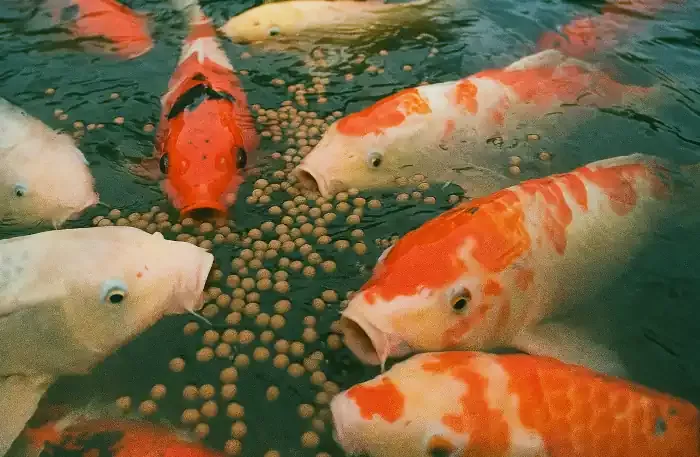
Koi are omnivorous carp, but natural foraging in a backyard pond may not supply a complete ration. Plan around a suitable complete food and measured conditions. Algae, insects, and kitchen treats are not automatic substitutes for formulated nutrition.
Natural Feeding in Context
Carp can take varied animal and plant material, depending on what is available. An earthen production pond and a small lined garden pond have different natural food supplies. The presence of surface algae does not tell you how much usable nutrition each koi receives. Avoid assuming fish can live well on whatever the pond produces.
What a Complete Food Supplies
A suitable formulation balances protein and amino acids, energy, essential fats, vitamins, and minerals. Pellet size, buoyancy, intended use, freshness, and feeding instructions matter. The highest protein percentage is not automatically the most appropriate maintenance food. Read food labels.
Keep Optional Extras in Proportion
Suitable occasional treats can provide variety or an observation opportunity when normal feeding is appropriate. Keep them modest within the ration, prepare manageable pieces, and remove leftovers. Do not use collected wild live foods or untested kitchen mixtures to replace the staple diet; source and preparation introduce their own risks.
Avoid Human-Food Assumptions
Bread, processed meats, oil, seasoning, and spoiled food do not belong in a routine koi diet. A food being fresh or healthy for people does not establish suitability for fish. A homemade long-term staple requires actual formulation expertise. See the human-diet comparison and treat precautions.
Match Feeding to the Pond
Measure temperature, observe access and response, and review oxygen and biological capacity before increasing food. Consuming every pellet does not prove the ration is safe. Use digestion and waste, pellet buoyancy, and seasonal decisions to manage the complete feeding plan.