
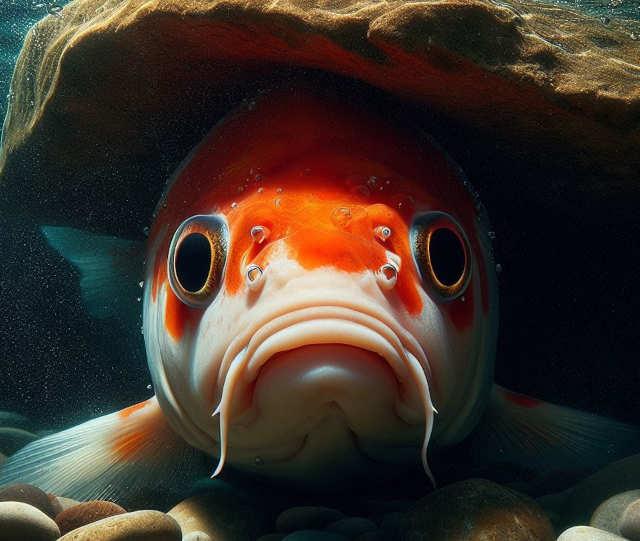
Hiding can follow a fright, a change in surroundings, or an unfamiliar keeper. It can also accompany poor conditions or illness. The useful question is whether the behavior is normal for those fish or a sudden change.
New Fish and New Surroundings
Recently introduced koi may take time to explore. Shadows, loud activity, maintenance, or a changed viewing position can make them cautious. Keep movements calm and allow voluntary approach. Do not repeatedly net or disturb fish just to make them visible.
Look for Predator or Disturbance Clues
A group retreat may follow a predator visit or another frightening event. Review safe pond access, nearby activity, and appropriate protective measures. One deterrent does not guarantee protection. Avoid adding covers or objects that create entanglement, restrict circulation, or obstruct maintenance.
Check Water and Equipment
If several fish change behavior together, inspect oxygen support, flow, temperature, and water tests. Consider recent refills, service, weather, or new additions. Appearance alone cannot rule out a water problem, and adding food to coax fish out can increase waste.
An Individual Needs Its Own Assessment
Watch for clamped fins, abnormal breathing, sores, repeated rubbing, loss of appetite, or isolation. Persistent hiding plus other changes warrants fish-health advice. Serious breathing trouble or impaired balance needs prompt help alongside equipment and water checks.
Encourage Confidence Gently
Use a predictable, calm presence and feed only when conditions and the care plan support it. Give the fish space to decide whether to approach. Track when hiding began and whether it improves without force. Compare behavior patterns, stress signs, and useful daily attention when deciding what to do next.