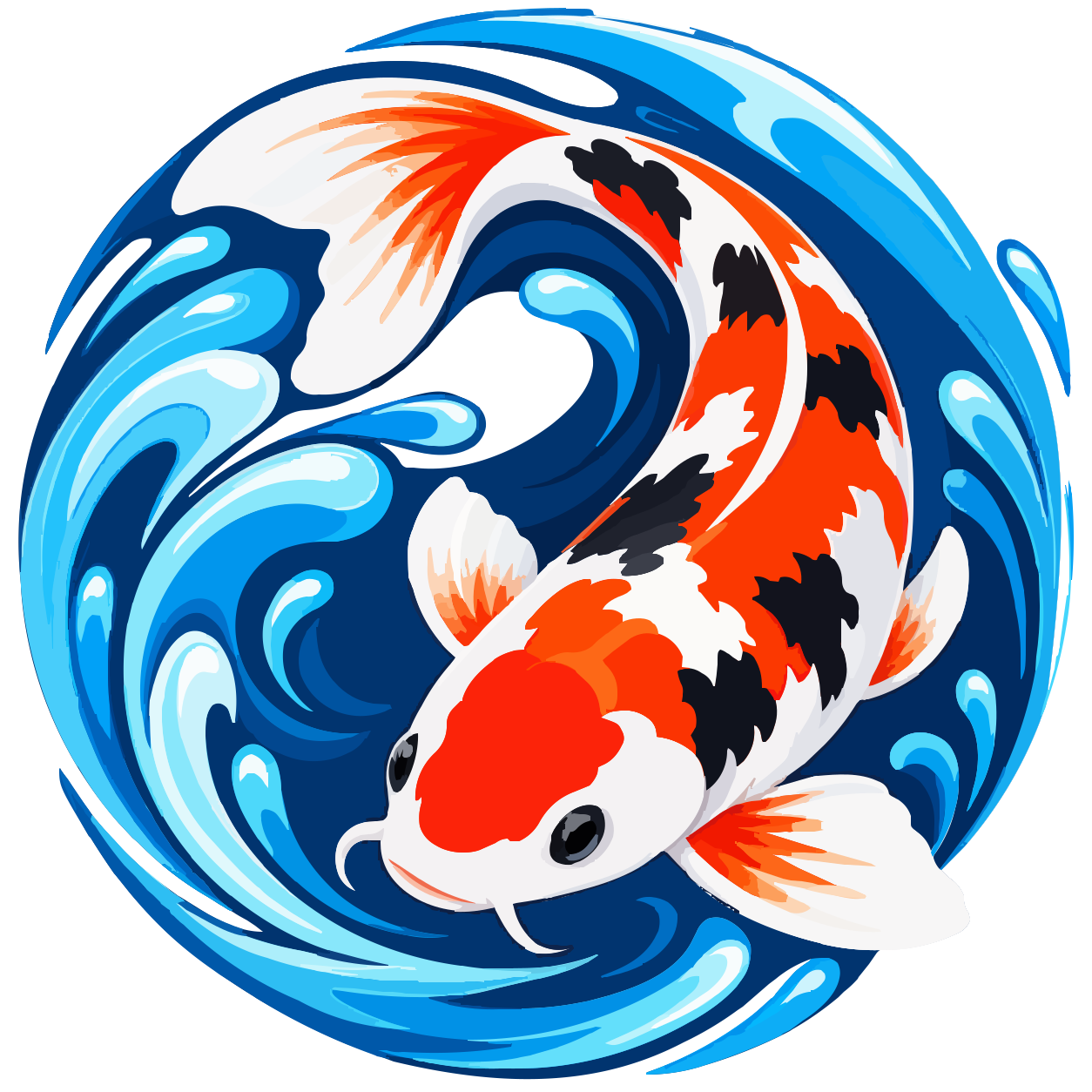
In English pond keeping, koi usually means ornamental carp bred for attractive color and pattern. In Japanese, koi is the word for carp; nishikigoi is the more specific name associated with the ornamental fish.
What Does Koi Mean?
The Japanese word 鯉, read koi, means carp. English speakers generally pronounce koi like 'coy' and use the same form for one fish or several fish. A phrase such as 'a koi' or 'several koi' is ordinary hobby usage.
Do not confuse the fish word with 恋, also pronounced koi, which refers to romantic love. The shared sound can inspire wordplay or symbolism, but the characters and meanings are different. A translation of the fish's name as 'love' loses that distinction.
Nishikigoi Means Brocaded Carp
Nishikigoi, written 錦鯉, combines brocade with carp: a reference to the ornamental effect of the fish. The term describes the wider ornamental tradition, not a particular breeder, quality grade, or price band. A simple pond fish can be nishikigoi without being a show winner.
You may see goi inside compound names such as Chagoi. That sound change does not identify a different kind of animal from koi. English spellings and spacing also vary among translations; small spelling differences should not be mistaken for a new variety.
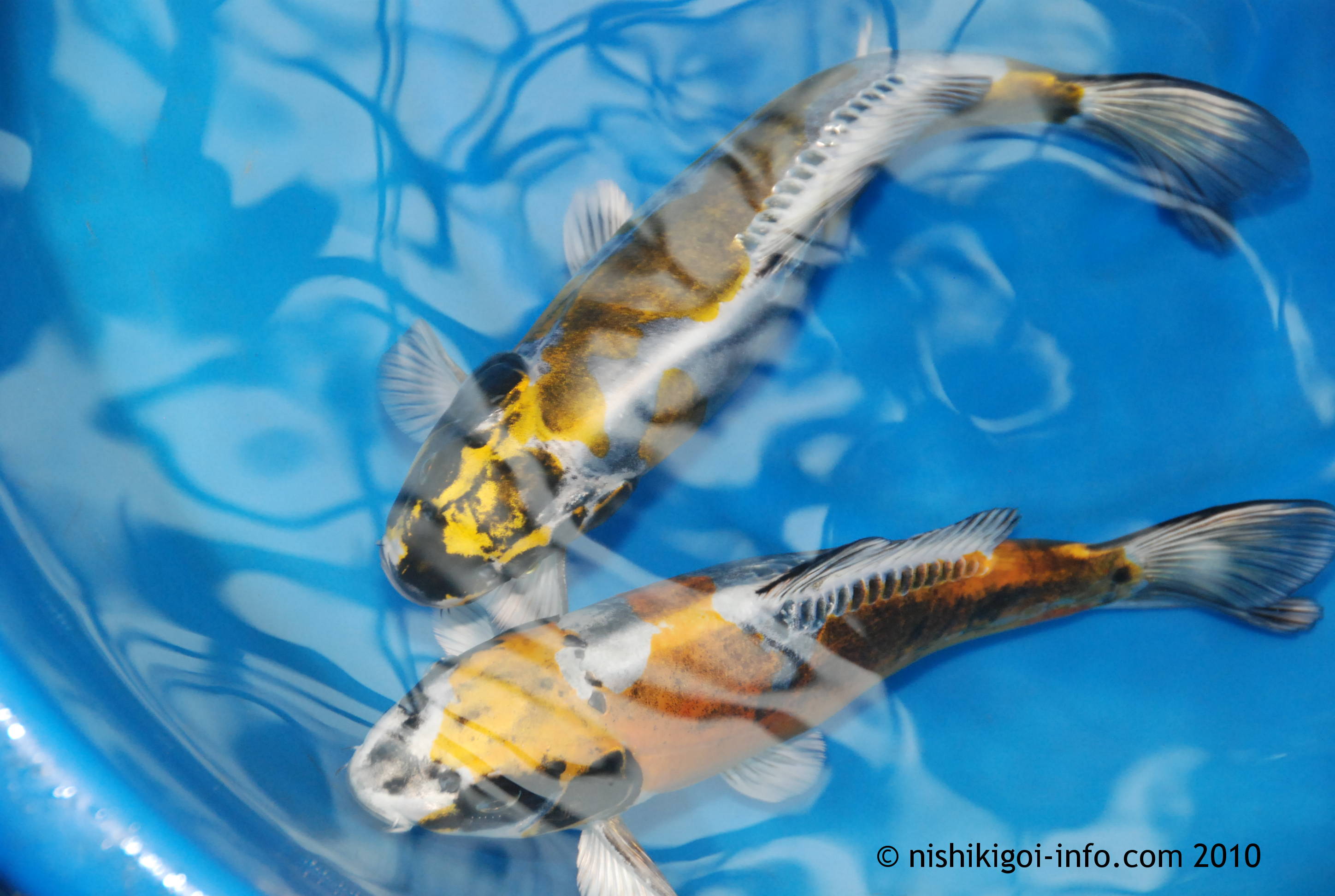
A Small Glossary of Color and Pattern
| Term | Meaning in koi discussion |
|---|---|
| Hi / beni | Red coloration or red pattern areas |
| Sumi | Black coloration or markings |
| Shiroji | The white ground |
| Kiwa | The defined edge of a colored pattern |
| Sashi | The leading transition where underlying color is seen through overlapping scales |
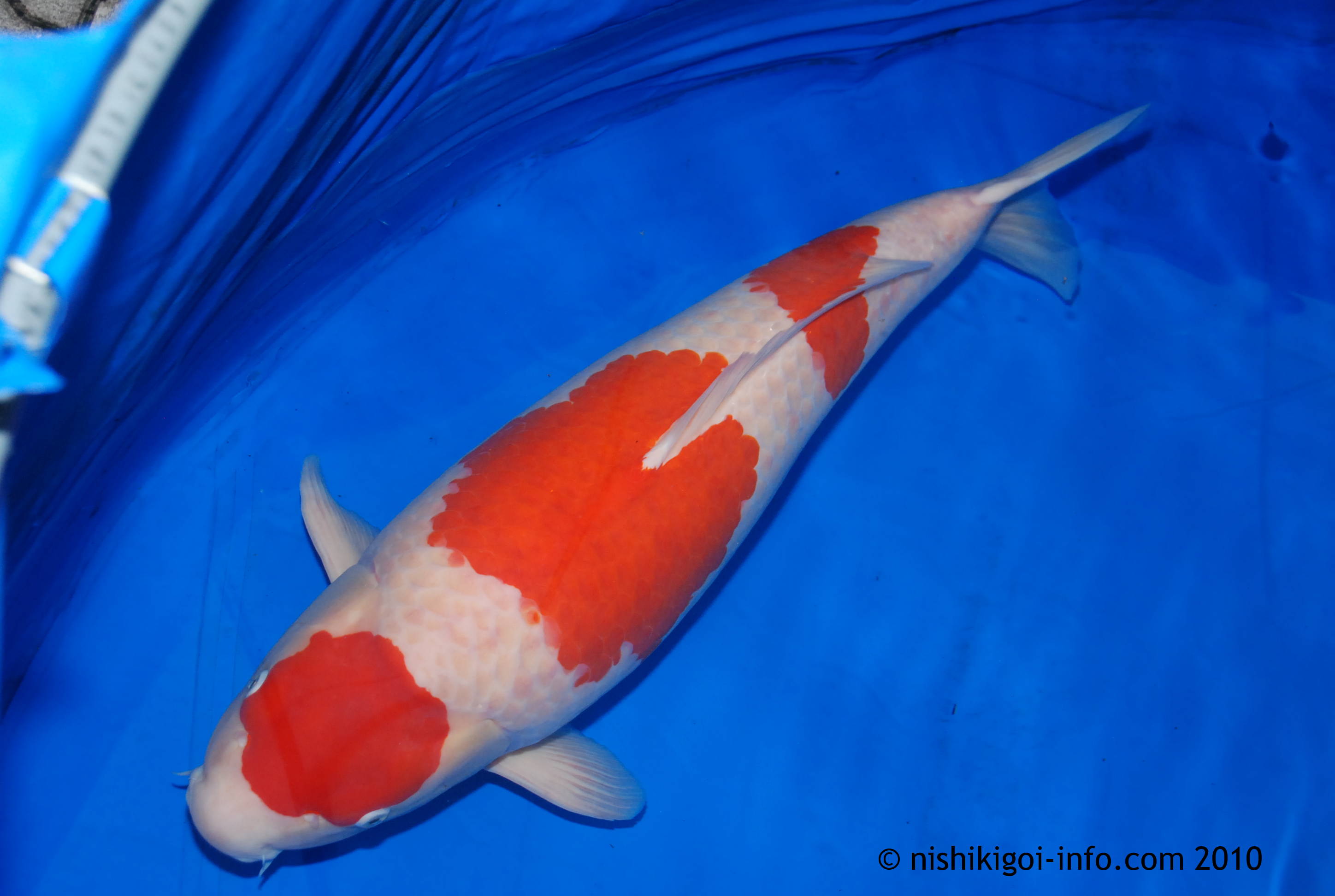
| Gosanke | The group comprising Kohaku, Taisho Sanke, and Showa Sanshoku |
These words help describe what you see. They do not supply a complete diagnosis, genetic model, or universal judging score. Pattern vocabulary is most useful when applied to the relevant variety and an actual fish.
Common Variety Names
| Name | Practical description |
|---|---|
| Kohaku | Red markings on white; the name refers to red and white |
| Taisho Sanke | White, red, and black; also called Taisho Sanshoku |
| Showa Sanshoku | Three-color koi with a different arrangement of black from Sanke |
| Bekko | White, red, or yellow fish with black markings |
| Utsurimono | Black-based contrasts with white, red, or yellow |
| Asagi | Blue-gray reticulated scaling with red-orange areas |
| Shusui | A reduced-scale form related to Asagi |
Learning a reliable description is better than assigning a poetic literal translation to every name. Some names refer to colors, some to historical eras, and others to visual comparisons. Avoid treating an unverified English gloss as a biological definition.
Scale Type and Shine Are Separate Features
Doitsu describes reduced scaling, which can include conspicuous rows of larger scales. It does not mean that every Doitsu fish has no scales at all. Ginrin describes reflective scales; metallic sheen is a different feature, seen in varieties such as Ogon. A fish may need more than one descriptive term.
Meaning, Symbolism, and Care
Koi imagery can suggest perseverance, prosperity, or personal growth, depending on its setting. Those interpretations do not define the Japanese noun or predict the animal's behavior. The Dragon Gate story is a Chinese carp legend that has also influenced wider East Asian imagery.
For visual identification, use the color-and-pattern guide and the ZNA variety profiles. For cultural interpretation, see koi symbolism. For biological identity and ownership, begin with what a koi fish is. Learning the language should make the hobby easier to navigate, while care decisions still depend on the actual fish and pond.