Koi classification is the art of identifying koi fish by color, pattern, scale type, metallic shine, and body appearance. Learning the major koi varieties makes the hobby more enjoyable because you can understand what you are looking at, compare koi more confidently, and choose fish that fit your pond or collection.
This koi variety guide is a visual directory of popular koi classifications, including Gosanke, Bekko, Utsurimono, Asagi, Shusui, Tancho, Hikarimono, Goromo, Hikarimoyo, Matsuba, and Kawarimono. Each variety below includes an image, a short identification guide, and a link to the full variety page.
How Koi Classification Works
Koi fish are usually classified by a combination of body color, pattern color, scale type, and finish. A red and white koi may be a Kohaku. A white koi with red and black markings may be a Sanke. A black koi with red and white markings may be a Showa. Once you learn the basic categories, the differences become much easier to spot.
| Hi or Beni | Red coloration on a koi. |
|---|---|
| Shiroji | The white ground or white skin of a koi. |
| Sumi | Black markings or black pattern. |
| Doitsu | A koi with few scales or scaleless-looking skin, often with larger mirror scales. |
| Ginrin | Sparkling, reflective scales that glitter in the light. |
| Hikari | Metallic shine or luster. |
| Tancho | A koi with a single red marking on the head and no other red on the body. |
| Kiwa | The rear edge of a color pattern, especially where red meets white. |
| Sashi | The leading edge where pattern appears under the skin, often seen in developing koi. |
What Makes One Koi Variety Different From Another?
Koi varieties are not random color names. Most classifications follow specific visual rules. Some are based on the base color of the fish. Some are based on the pattern. Some are defined by metallic shine, scale type, or the placement of markings.
A good example is the difference between Sanke and Showa. Both can have red, white, and black, but Sanke are generally understood as white-based koi with red and black markings, while Showa are black-based koi with red and white markings. This is why black on the head is often an important clue when comparing the two.
Koi classification also helps when buying koi. Once you know what defines a Kohaku, Sanke, Showa, Utsuri, Ogon, or Asagi, you can look more carefully at pattern balance, color quality, body shape, skin condition, and long-term development.
Gosanke: Kohaku, Sanke, and Showa
Gosanke are the three classic koi varieties most associated with traditional koi judging: Kohaku, Sanke, and Showa. These three varieties are especially important because they represent some of the most refined pattern and color development in the koi hobby.
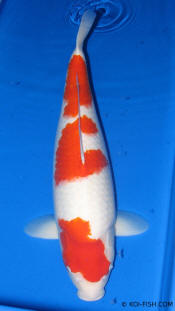
Kohaku
Kohaku are white koi with red markings. This is one of the most famous koi varieties and often considered the foundation of the hobby. Look for clean white skin, strong red color, and a balanced pattern from head to tail.
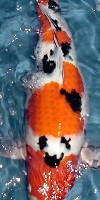
Sanke
Sanke, also called Taisho Sanshoku, are white koi with red and black markings. A good Sanke usually has a strong Kohaku-style red pattern with sumi placed like stepping stones across the body.
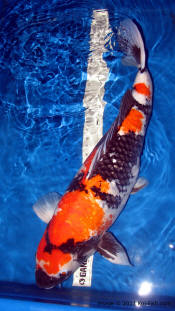
Showa
Showa, or Showa Sanshoku, are black-based koi with red and white markings. Showa often have black on the head and bold sumi that wraps around the body, giving them a powerful, dramatic appearance.
Bekko: Colored Koi With Black Markings
Bekko are simple, elegant koi with a white, yellow, or red base color and black markings. The sumi should appear as clean, balanced patches rather than large wrapping bands.
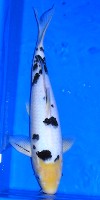
Shiro Bekko
Shiro Bekko are white koi with black markings. They can be confused with Shiro Utsuri, but Bekko usually have smaller black patches rather than large bands of black.
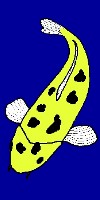
Ki Bekko
Ki Bekko are yellow koi with black markings. The yellow base color should be clean and the sumi should be balanced across the body.
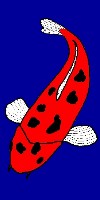
Aka Bekko
Aka Bekko are red koi with black markings. They are less common than Shiro Bekko and can make a strong visual statement in a mixed koi pond.
Utsurimono: Black Koi With Colored Patterns
Utsurimono are black-based koi with white, yellow, or red markings. Compared with Bekko, Utsuri usually have more powerful black that wraps around the body.
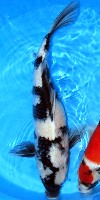
Shiro Utsuri
Shiro Utsuri are black and white koi. A good Shiro Utsuri has strong contrast, clean white, deep sumi, and a balanced pattern that often includes black on the head.
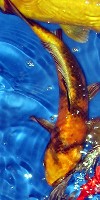
Ki Utsuri
Ki Utsuri are black koi with yellow markings. The combination is bold and unusual, making Ki Utsuri easy to spot in a pond.
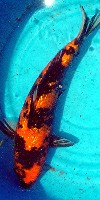
Hi Utsuri
Hi Utsuri are black koi with red or orange-red markings. They are dramatic, high-contrast koi that can look especially impressive as they grow larger.
Asagi and Shusui
Asagi and Shusui are older-looking, elegant koi varieties known for blue-gray tones and red or orange accents. They are especially useful varieties for learning how scale pattern and skin type affect classification.
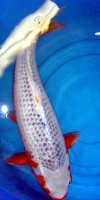
Asagi
Asagi have a blue-gray netted scale pattern with red or orange accents along the sides, cheeks, and fins. Clean reticulation and balanced red placement are important visual traits.
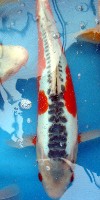
Shusui
Shusui are the Doitsu version of Asagi. Instead of a full netted scale pattern, Shusui usually have large mirror scales along the dorsal line with blue-gray skin and red accents.
Tancho Koi: The Red Head Marking
Tancho koi are defined by a single red marking on the head with no other red on the body. The most famous example is Tancho Kohaku, but Tancho markings can appear in several varieties.
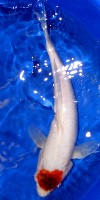
Tancho Goromo
Tancho Goromo combine a Tancho head marking with Goromo-style dark edging or shading in the red pattern. The head marking should be centered and pleasing.
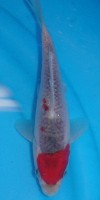
Tancho Goshiki
Tancho Goshiki have a red head marking with the darker, netted body appearance associated with Goshiki. The contrast between the head spot and body pattern is the attraction.
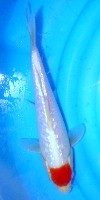
Tancho Kohaku
Tancho Kohaku are white koi with a single red spot on the head. There should be no other red markings on the body. A centered, clean, round marking is especially desirable.
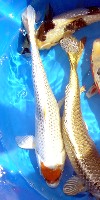
Tancho Kujaku
Tancho Kujaku combine the metallic, netted look of Kujaku with a single red head marking. The reticulation should be clean and the head marking should be well placed.
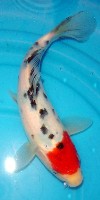
Tancho Sanke
Tancho Sanke are white koi with a red head marking and black Sanke-style sumi on the body. The sumi should be balanced and should not crowd the head spot.
Hikarimono and Ogon: Metallic Single-Color Koi
Hikarimono are metallic koi. Ogon are solid metallic koi, often gold, orange, silver, or gray. In these varieties, shine, clean skin, even color, and body shape are especially important because there is no complex pattern to hide flaws.
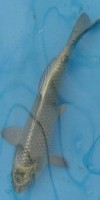
Nezu Ogon
Nezu Ogon are metallic gray koi. Look for even metallic luster, clean scales, and consistent color from head to tail.
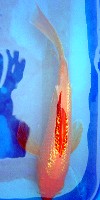
Orenji Ogon
Orenji Ogon are metallic orange koi. Their appeal comes from bright color, clean skin, strong shine, and a smooth body line.
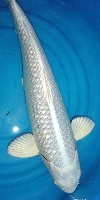
Platinum Ogon
Platinum Ogon are solid metallic white or silver koi. Because the color is simple, skin quality, shine, body shape, and clean fins are especially noticeable.
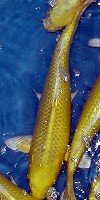
Yamabuki Ogon
Yamabuki Ogon are solid metallic yellow or gold koi. They are popular pond fish because their bright color and shine stand out beautifully in the water.
Goromo and Goshiki
Goromo koi look somewhat like Kohaku at first, but the red pattern is overlaid with darker edging or shading. Goshiki means “five colors” and often combines a Kohaku-style pattern with a darker, netted body effect.
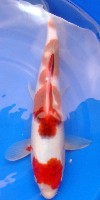
Ai Goromo
Ai Goromo have red markings with blue or dark edging over the pattern. The best examples still feel clean and organized rather than muddy.
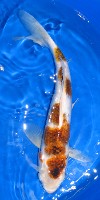
Budo Goromo
Budo Goromo have a grape-like dark overlay in the red pattern. They can be very striking when the pattern is clean and the body remains bright.
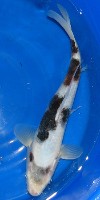
Sumi Goromo
Sumi Goromo show darker black shading over the red pattern. The contrast can be dramatic, but the koi should still have a balanced overall appearance.
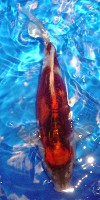
Goshiki
Goshiki koi often have a red pattern over a darker, netted body background. They can range from subtle and refined to bold and high contrast.
Hikarimoyo: Metallic Patterned Koi
Hikarimoyo are metallic koi with more than one color or a visible pattern. These varieties often sparkle in sunlight and can be very eye-catching in backyard ponds.
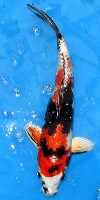
Kin Showa
Kin Showa are metallic Showa-type koi with red, white, and black patterning. The metallic sheen adds extra brightness to an already dramatic variety.
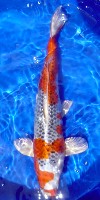
Kujaku
Kujaku are metallic koi with a netted Matsuba-style scale pattern and orange, red, or gold markings. A clean net pattern and strong shine are important.
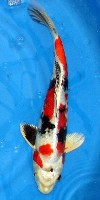
Yamato Nishiki
Yamato Nishiki are metallic Sanke-type koi. They combine the red, white, and black pattern of Sanke with the reflective shine of Hikari varieties.
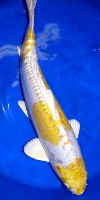
Doitsu Hariwake
Doitsu Hariwake are metallic koi with a clean white or platinum base and yellow or orange patterning. The Doitsu skin gives them a smooth, bright appearance.
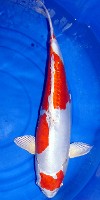
Kikusui
Kikusui are metallic Doitsu koi with white skin and red or orange markings. They are bright, clean, and very popular in ornamental ponds.
Matsuba: Pinecone or Reticulated Scale Pattern
Matsuba koi have a dark center or shading on each scale, creating a pinecone-like netted appearance. The quality of the reticulation is one of the main things to look for.
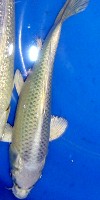
Shiro Matsuba
Shiro Matsuba are white or silver koi with dark scale centers that create a clean reticulated pattern. Even scale alignment makes this variety especially attractive.
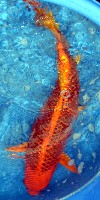
Aka Matsuba
Aka Matsuba are red koi with a dark reticulated scale pattern. The red should be strong and the dark scale centers should be consistent.
Kawarimono: Unique and Unusual Koi Varieties
Kawarimono is a broad classification for koi that do not fit neatly into the more formal categories. This group includes some of the friendliest, most unusual, and most personality-filled koi in the hobby.
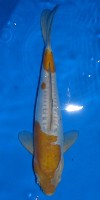
Ochiba Shigure
Ochiba Shigure often have a gray-blue body with brown or bronze markings. The name is associated with the look of autumn leaves on water.
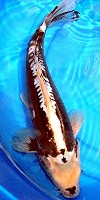
Kumonryu
Kumonryu are black and white Doitsu koi known for patterns that may change over time. Their dramatic appearance makes them one of the most unusual koi varieties.
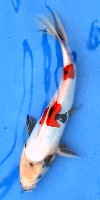
Beni Kumonryu
Beni Kumonryu are Kumonryu-type koi with red added to the black and white pattern. Like Kumonryu, their appearance may change as they develop.
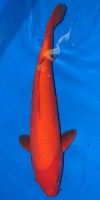
Benigoi
Benigoi are solid red koi. Because the color is simple, look closely at body shape, skin quality, even color, fins, and any old scars or scale damage.

Karasugoi
Karasugoi are solid black koi. Their beauty comes from deep, even black color and a clean body without distracting scars or damaged scales.
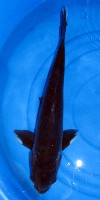
Haijiro
Haijiro are dark koi with white-tipped fins. The fin edges should look balanced and clean on both sides of the fish.
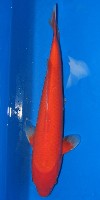
Aka Haijiro
Aka Haijiro are red koi with white-tipped fins. The clean fin contrast makes them a simple but attractive pond variety.
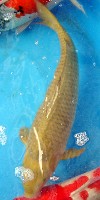
Chagoi
Chagoi are brown or tea-colored koi. They are often loved for their size, calm personality, and tendency to become friendly with people.
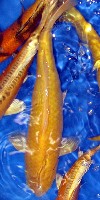
Kigoi
Kigoi are solid yellow koi. Clean, even yellow color and a healthy body shape are the main features to look for.
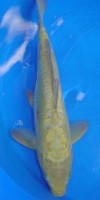
Midorigoi
Midorigoi are greenish koi, making them unusual among koi varieties. They are often appreciated by collectors who want something different.

Soragoi
Soragoi are gray koi. Like Chagoi, they are often appreciated for calm behavior, strong growth, and a friendly pond presence.
Doitsu and Ginrin Versions of Koi Varieties
Many koi classifications can also appear in Doitsu or Ginrin forms. A Doitsu koi has few scales or a scaleless appearance, often with larger mirror scales along the back or sides. A Ginrin koi has sparkling scales that reflect light.
These terms usually describe scale type, not a completely separate color variety. For example, a Doitsu Kohaku is still a Kohaku, but with Doitsu-style scaling. A Ginrin Showa is still a Showa, but with glittering reflective scales.
How to Use This Koi Variety Guide
When identifying a koi fish, start with the biggest visual clues:
- What is the base color of the koi?
- Does it have red, black, white, yellow, gray, or metallic color?
- Is the koi metallic or non-metallic?
- Does it have a full scale pattern, Doitsu scales, or Ginrin sparkle?
- Is the red only on the head, making it a Tancho type?
- Does the black appear as small spots, large wrapping bands, or a full base color?
Once you answer those questions, the variety usually becomes much easier to narrow down. Then you can look at details such as pattern balance, kiwa, sumi quality, body shape, skin quality, and future development.
Where Did Koi Varieties Come From?
Modern koi fish developed from color mutations in common carp that were selectively bred over many generations. As breeders noticed unusual colors and patterns, they kept and bred those fish to strengthen the traits. Over time, this created the many koi varieties seen today.
Koi classification grew along with the hobby. As more colors, patterns, and scale types appeared, hobbyists and breeders needed names to describe them. Today, those names help koi keepers understand what they are seeing and help buyers compare koi more confidently.
Frequently Asked Questions About Koi Classification
What are the main koi varieties?
Some of the most recognized koi varieties include Kohaku, Sanke, Showa, Shiro Utsuri, Asagi, Shusui, Tancho, Ogon, Kujaku, Goshiki, Chagoi, Soragoi, and Ochiba Shigure.
What does Gosanke mean?
Gosanke refers to the three classic koi varieties Kohaku, Sanke, and Showa. These are among the most important and popular koi classifications.
What is the difference between Sanke and Showa?
Sanke are generally white-based koi with red and black markings. Showa are black-based koi with red and white markings. Black on the head is often a clue that the koi may be Showa rather than Sanke.
What is a Tancho koi?
A Tancho koi has a single red marking on the head and no other red on the body. Tancho Kohaku is the best-known Tancho variety.
What does Doitsu mean?
Doitsu refers to koi with few scales or a scaleless appearance, often with larger mirror-like scales along the back or sides.
What does Ginrin mean?
Ginrin refers to sparkling, reflective scales. Ginrin can appear in many different koi varieties.
What is the easiest koi variety to recognize?
Kohaku is one of the easiest varieties for beginners to recognize because it has a simple white body with red markings.
Which koi varieties are best for beginners?
Beginners can enjoy many varieties, but friendly, hardy pond koi such as Chagoi, Soragoi, Ogon, Kohaku, and mixed pond-grade koi are often enjoyable choices. Health, pond suitability, and water quality matter more than variety name.
Keep Learning About Koi Fish
Koi classification helps you understand the beauty and history behind each fish, but variety is only one part of koi keeping. A beautiful koi still needs clean water, proper feeding, strong filtration, and a healthy pond environment.
Continue learning with our guides on Koi Fish, Koi Care, Water Quality, Pond Filtration, and Koi Health.